Beechcraft King Air 350iMSFS 2024 Startup Checklist · 189 steps
Beechcraft King Air 350i
MSFS 2024 - 0/189 STEPS
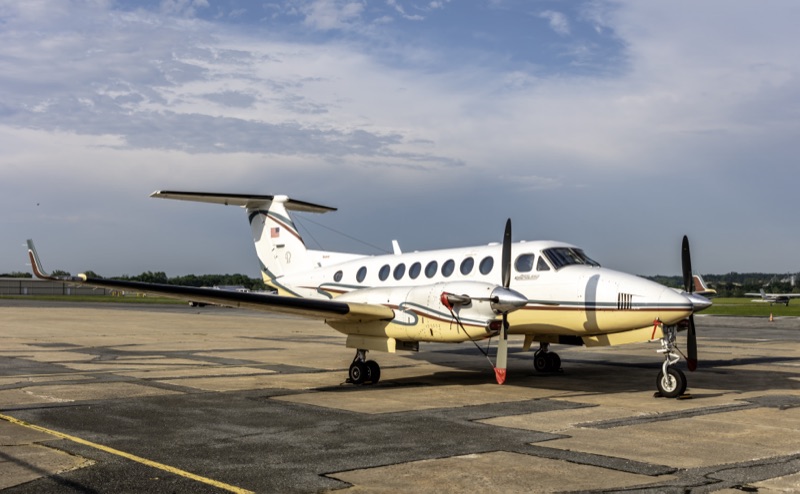
Wikimedia CommonsCC BY-SA 4.0
General AviationModern
AIRCRAFT BRIEF
The Beechcraft King Air 350 (Model B300) entered service in 1990 as a stretched, winglet-equipped evolution of the King Air 300, cementing Beechcraft's dominance in the executive turboprop market. The 350i variant, introduced in 2008, added a restyled interior with active noise cancellation, making cabin comfort competitive with light jets. Over 440 King Air 350i aircraft had been delivered in its first decade of production, and the type remains among the best-selling business turboprops in history.
RANGE VISUALIZER
SPECIFICATIONS
manufacturerBeechcraft (Textron Aviation)
first Flight1988 (B300 prototype)
roleTwin-engine turboprop executive transport
crew1-2 pilots + up to 9 passengers
engines2x Pratt and Whitney Canada PT6A-60A (1,050 shp each)
max Speed578 km/h (312 kts)
range3,345 km (1,806 nmi)
ceiling35,000 ft
weight6,804 kg (MTOW)
PHS 1 — Pre-Flight Planning8 steps
| 01 | Weather Briefing (METAR / TAF)NOTE: Check departure, enroute, destination, and alternate. Pay attention to icing conditions and convective activity. | REVIEWED | |
| 02 | NOTAMs | REVIEWED | |
| 03 | Fuel RequiredNOTE: KA350i burns approx 480-550 lbs/hr total (~78-96 GPH). Include 45-min VFR reserve or IFR alternate fuel. | CALCULATED | |
| 04 | Weight and BalanceCAUTION: Verify passenger and cargo placement. MTOW is 15,000 lbs (6,804 kg). Check CG limits carefully. | WITHIN LIMITS | |
| 05 | Takeoff and Landing DistancesNOTE: Sea level MTOW takeoff roll approx 3,300 ft. Account for density altitude, slope, and contamination. | CALCULATED | |
| 06 | ProLine Fusion Flight PlanNOTE: Prepare route for entry into Collins Aerospace ProLine Fusion avionics suite on the ground. | PLANNED | |
| 07 | V-Speeds CalculatedNOTE: Confirm V1, Vr, V2 for takeoff weight and conditions. Vref for expected landing weight. | NOTED | |
| 08 | Flight Plan | FILED |
PHS 2 — Before Start25 steps
| 01 | Parking Brake | SET | |
| 02 | Battery SwitchNOTE: Verify battery voltage on the ProLine Fusion MFD or standby instruments. | ON | |
| 03 | External PowerNOTE: Use GPU when available to save battery during avionics initialization. | CONNECT (if available) | |
| 04 | Avionics MasterNOTE: Allow ProLine Fusion displays to initialize. Both PFDs and MFD should power up. | ON | |
| 05 | ProLine Fusion - INITNOTE: Enter aircraft identification, confirm date and time on the FMS initialization page. | COMPLETE | |
| 06 | FMS Flight PlanNOTE: Enter departure, destination, route, and SID. Confirm on F-PLN page. | ENTERED | |
| 07 | Fuel QuantityNOTE: Total capacity 539 US gal (3,650 lbs). Verify main and aux tank quantities match planned fuel. | CHECK - SUFFICIENT | |
| 08 | Fuel Selector | MAIN TANKS - ON | |
| 09 | Fuel Crossfeed | OFF | |
| 10 | Power Levers | IDLE | |
| 11 | Propeller Levers | FULL FORWARD (1,700 RPM) | |
| 12 | Condition LeversNOTE: Both condition levers must be in FUEL CUTOFF before engine start. | FUEL CUTOFF | |
| 13 | Generator Switches | OFF | |
| 14 | Bleed Air SwitchesNOTE: Keep bleed air off until after engine start. | OFF (both engines) | |
| 15 | Air Conditioning | OFF | |
| 16 | Pressurization - Cabin Alt Selector | SET (destination field elevation) | |
| 17 | Pressurization - Rate | SET (500 fpm) | |
| 18 | Anti-Ice SwitchesNOTE: Engine anti-ice ON when OAT below +5 C in visible moisture. Wing/prop anti-ice as conditions require. | OFF (check for icing conditions) | |
| 19 | Pitot Heat | ON | |
| 20 | Ignition Mode Switch | AUTO | |
| 21 | AutofeatherCAUTION: Autofeather must be armed before takeoff. Verify ARM light illuminated on annunciator panel. | ARMED | |
| 22 | Passenger BriefingNOTE: Brief passengers on emergency exits, seatbelts, and no-smoking policy. | COMPLETE | |
| 23 | Doors | CLOSED AND LATCHED | |
| 24 | Beacon LightNOTE: Illuminate beacon to signal imminent engine start to ground personnel. | ON | |
| 25 | GSX - Fuel TruckNOTE: GSX menu: Refuel Aircraft. Set desired fuel load before confirming. | REFUEL COMPLETE |
PHS 3 — Engine Start17 steps
| 01 | Area ClearCAUTION: Confirm prop arc area is clear on both sides before engaging starter. | VERIFY | |
| 02 | Right Engine Start SwitchNOTE: Start right engine first. Hold starter switch and monitor N1/Ng rising. | START (engage starter) | |
| 03 | Right Engine - N1 at 12%NOTE: Advance right condition lever to LOW IDLE when Ng reaches 12%. Monitor ITT rise. | CONDITION LEVER - LOW IDLE | |
| 04 | Right Engine ITTWARNING: Abort start immediately if ITT exceeds 1,000 C. Move condition lever to FUEL CUTOFF. | MONITOR - MAX 1,000 C START | |
| 05 | Right Engine - N1 at 50%NOTE: Starter should disengage automatically at approximately 50% Ng. | STARTER DISENGAGES AUTO | |
| 06 | Right Engine - Stabilize at IdleWARNING: Shut down immediately if oil pressure does not rise within 60 seconds of fuel flow. | CHECK OIL PRESSURE | |
| 07 | Right Engine at Idle - ParametersNOTE: Idle: Ng ~70%, Np ~1,050 RPM, ITT under 750 C, oil pressure above 90 psi. | Ng ~70%, ITT <750 C, Oil Psi >90 | |
| 08 | Right GeneratorNOTE: Switch right generator ON and verify it comes online on the electrical bus. | ON | |
| 09 | Right Engine Bleed AirNOTE: After right generator is online, enable right engine bleed air. | ON | |
| 10 | Left Engine Start SwitchNOTE: Same procedure as right engine. Monitor Ng rise and ITT. | START (engage starter) | |
| 11 | Left Engine - N1 at 12%NOTE: Advance left condition lever to LOW IDLE when Ng reaches 12%. | CONDITION LEVER - LOW IDLE | |
| 12 | Left Engine ITTWARNING: Abort start immediately if ITT exceeds 1,000 C. Move condition lever to FUEL CUTOFF. | MONITOR - MAX 1,000 C START | |
| 13 | Left Engine - Stabilize at Idle | CHECK OIL PRESSURE | |
| 14 | Left Engine at Idle - Parameters | Ng ~70%, ITT <750 C, Oil Psi >90 | |
| 15 | Left Generator | ON | |
| 16 | Left Engine Bleed Air | ON | |
| 17 | External Power | DISCONNECT (if used) |
PHS 4 — After Start19 steps
| 01 | Both Engines - ParametersNOTE: Both engines stable at idle. Ng ~70%, ITT <750 C, oil pressure 90-135 psi, oil temp in green. | NORMAL | |
| 02 | Condition LeversNOTE: Advance both condition levers from LOW IDLE to HIGH IDLE for ground operations. | HIGH IDLE | |
| 03 | Electrical BusNOTE: Verify both generators are online and bus voltage is normal on the electrical synoptic. | BOTH GENERATORS ON - CHECK | |
| 04 | Air Conditioning | ON (as required) | |
| 05 | Pressurization Mode | AUTO | |
| 06 | Cabin DifferentialNOTE: The King Air 350i is rated to 6.5 psi differential, providing sea-level cabin to approximately 29,000 ft. | SET (.55 max differential) | |
| 07 | Avionics / ProLine FusionNOTE: Verify AHRS, ADC, and FMS all show valid data. Cross-check PFD attitude with standby. | INITIALIZE - CHECK | |
| 08 | Altimeter (PFD) | SET QNH | |
| 09 | Standby Altimeter | SET QNH | |
| 10 | Heading Indicator | ALIGNED WITH MAGNETIC COMPASS | |
| 11 | FMS Active Flight Plan | VERIFY | |
| 12 | Transponder | SET CODE - STBY | |
| 13 | Radios | SET COM1 / COM2 FREQUENCIES | |
| 14 | Nav Radios | SET / CONFIRM FMS NAV SOURCE | |
| 15 | Flight ControlsCAUTION: Check ailerons, elevator, and rudder for full and free movement. Verify correct deflection on PFD control page. | CHECK FULL DEFLECTION - FREE | |
| 16 | Elevator TrimNOTE: Typically 3-5 deg nose up for normal CG. Refer to weight and balance. | SET FOR TAKEOFF | |
| 17 | Rudder Trim | NEUTRAL | |
| 18 | Aileron Trim | NEUTRAL | |
| 19 | FlapsNOTE: King Air 350i departs flaps up for most normal conditions. Check AFM for heavy weight short field. | UP (0) |
PHS 5 — Taxi10 steps
| 01 | ATIS / D-ATIS | RECEIVED AND NOTED | |
| 02 | Clearance Delivery | DEPARTURE CLEARANCE RECEIVED | |
| 03 | Taxi Light | ON | |
| 04 | Navigation Lights | ON | |
| 05 | Parking Brake | RELEASE | |
| 06 | BrakesNOTE: Apply brakes gently as aircraft begins to roll to verify proper brake function. | CHECK during first movement | |
| 07 | Power LeversNOTE: Turboprop power response is not immediate. Apply power smoothly to avoid over-torque. | ADVANCE SMOOTHLY | |
| 08 | Prop Speed - TaxiCAUTION: Maintain propeller RPM above 1,050 or below 400 RPM during ground operations to avoid propeller resonance band. | ABOVE 1,050 RPM | |
| 09 | Turns | TAXI SPEED - MODERATE | |
| 10 | Flight InstrumentsNOTE: Verify attitude indicator stays level, compass/HSI tracks heading changes during turns. | CHECK DURING TAXI |
PHS 6 — Before Takeoff17 steps
| 01 | Flight Controls | FREE AND CORRECT | |
| 02 | Elevator Trim | SET - CONFIRM | |
| 03 | FlapsNOTE: Verify on flap indicator. Normal departures are flaps up. Short field may use approach flaps. | UP (0) - CONFIRM | |
| 04 | Condition Levers | HIGH IDLE - CONFIRM | |
| 05 | Propeller LeversNOTE: Both prop levers full forward for maximum RPM at takeoff. | FULL FORWARD (1,700 RPM) | |
| 06 | AutofeatherCAUTION: Verify ARM annunciator is illuminated. Autofeather will feather the prop if an engine fails above 90% torque. | ARMED - VERIFY | |
| 07 | Fuel - Quantity and Balance | CHECKED - CROSSFEED OFF | |
| 08 | Pressurization | AUTO - CABIN RATE SET | |
| 09 | Anti-Ice / DeiceNOTE: Engine anti-ice ON if OAT below +5 C in visible moisture. Do not use wing deice on ground. | AS REQUIRED | |
| 10 | Pitot Heat | ON | |
| 11 | Autopilot | OFF FOR TAKEOFF | |
| 12 | Yaw DamperNOTE: Yaw damper may be engaged for takeoff if conditions warrant. Typically engaged at 400-500 ft AGL. | ENGAGE | |
| 13 | Transponder | ALT (Mode C) - TA/RA (if TCAS) | |
| 14 | Takeoff BriefingNOTE: Brief engine failure procedure: at/below V1 abort; above V1 continue with Vmca=93 KIAS flaps approach, 94 KIAS clean. | COMPLETE | |
| 15 | Landing Light | ON | |
| 16 | Strobe Lights | ON | |
| 17 | Cabin Crew / Passengers | NOTIFIED - SEATBELTS CHECKED |
PHS 7 — Takeoff9 steps
| 01 | Line Up - Runway Heading | VERIFY ON HSI/PFD | |
| 02 | Power LeversNOTE: Apply power smoothly to approximately 100% torque. Monitor ITT - max 820 C for takeoff. | ADVANCE TO TORQUE LIMIT | |
| 03 | Engine InstrumentsNOTE: Both engines: torque matched, ITT below 820 C, N1 below 104%, Np 1,700 RPM. | CHECK - IN LIMITS | |
| 04 | Airspeed - 60 KIAS | AIRSPEED ALIVE - CALL | |
| 05 | V1 (approx 105 KIAS) | CALL V1 - COMMIT TO TAKEOFF | |
| 06 | Vr (approx 110 KIAS) | ROTATE - 10 DEG NOSE UP | |
| 07 | Positive Rate of ClimbNOTE: Confirm positive VSI before raising gear. | CALL - GEAR UP | |
| 08 | Landing GearCAUTION: Raise gear only with positive rate of climb confirmed on VSI. Verify gear handle up and lights show transit then off. | UP - VERIFY | |
| 09 | V2 (approx 117 KIAS) | MAINTAIN UNTIL 400 FT AGL |
PHS 8 — Climb11 steps
| 01 | AirspeedNOTE: Graduated climb speeds: 170 KIAS to 10,000 ft, 160 to 15,000, 150 to 20,000, 140 to 25,000, 130 to 30,000, 120 above. | 170 KIAS (sea level - 10,000 ft) | |
| 02 | Power LeversNOTE: Maintain max continuous power at 100% torque for climb. Monitor ITT - max 785 C climb limit. | MAX CLIMB TORQUE (100% TQ) | |
| 03 | Propeller LeversNOTE: Reduce props to 1,600 RPM for climb to reduce noise and vibration. | 1,600 RPM (climb sync) | |
| 04 | Prop SyncNOTE: Engage prop sync system to eliminate beat frequency between the two propellers. | ENGAGE | |
| 05 | Landing Light | OFF above 10,000 ft | |
| 06 | Yaw Damper | ENGAGE (if not already) | |
| 07 | AutopilotNOTE: Engage autopilot and connect to FMS for managed climb. Select VS or IAS mode as preferred. | ENGAGE (if desired) | |
| 08 | Autofeather | VERIFY ARMED | |
| 09 | PressurizationNOTE: Verify cabin altitude is climbing at correct rate toward cruise cabin altitude. | CHECK - CABIN CLIMBING NORMALLY | |
| 10 | Anti-Ice / DeiceNOTE: Monitor OAT and icing conditions. Engine anti-ice ON below +5 C in visible moisture. | AS REQUIRED | |
| 11 | 10,000 ft | SEATBELT SIGN - AS REQUIRED |
PHS 9 — Cruise11 steps
| 01 | AltitudeNOTE: Typical cruise altitudes FL250-FL350. ProLine Fusion will alert if cruise altitude differs from clearance. | LEVEL OFF - VERIFY | |
| 02 | Power Levers - Cruise SettingNOTE: High-speed cruise: ~87% torque at FL350 (312 kts). Long-range cruise: ~66% torque (~260 kts). | REDUCE TO CRUISE TORQUE | |
| 03 | Propeller LeversNOTE: Reduce props to 1,500 RPM for cruise efficiency. Prop sync ON. | 1,500 RPM (cruise) | |
| 04 | Condition Levers | HIGH IDLE - CONFIRM | |
| 05 | AutofeatherNOTE: Autofeather is typically disarmed in cruise to prevent inadvertent feathering. | OFF (cruise) | |
| 06 | PressurizationNOTE: Cabin altitude should be stable. Check differential pressure does not exceed 6.5 psi maximum. | CHECK - CABIN ALTITUDE STABLE | |
| 07 | Fuel BalanceNOTE: Check fuel balance every 30 minutes. Use crossfeed to correct imbalances exceeding 200 lbs. | CHECK - CROSSFEED AS NEEDED | |
| 08 | Engine InstrumentsNOTE: Cruise: ITT <820 C, oil temp 0-110 C, oil pressure 90-135 psi. | MONITOR - IN LIMITS | |
| 09 | Anti-Ice | AS REQUIRED | |
| 10 | Autopilot / FMS | VERIFY ON TRACK | |
| 11 | Top of DescentNOTE: Use 3-to-1 rule: 3 nmi per 1,000 ft of descent. Begin descent ~90 nmi from destination at FL350. | CALCULATE |
PHS 10 — Descent12 steps
| 01 | ATIS / D-ATIS | RECEIVED AND NOTED | |
| 02 | FMS - ArrivalNOTE: Select and activate STAR, transition, and expected approach. Verify destination in FMS. | ENTER STAR / APPROACH | |
| 03 | Altimeter | SET QNH (destination) | |
| 04 | Descent SpeedNOTE: Maintain M0.58 above FL280, transition to 250 KIAS below. Do not exceed VMO of 287 KIAS. | M0.58 OR 250 KIAS (whichever less) | |
| 05 | Propeller Levers | 1,600 RPM | |
| 06 | Power LeversNOTE: Target 1,500 fpm descent. Use power as needed to manage speed in descent. | REDUCE TO MAINTAIN SPEED | |
| 07 | AutofeatherNOTE: Re-arm autofeather for approach phase. | ARMED | |
| 08 | Auto-IgnitionNOTE: Arm auto-ignition for approach - provides restart protection during power reductions. | ARM | |
| 09 | Fuel Balance | CHECK - CROSSFEED AS REQUIRED | |
| 10 | Pressurization | CHECK - CABIN DESCENDING | |
| 11 | Seatbelt Sign | ON | |
| 12 | Anti-Ice / Deice | AS REQUIRED |
PHS 11 — Before Landing15 steps
| 01 | Approach BriefingNOTE: Brief approach type, minimums, missed approach procedure, and engine-out procedure. | COMPLETE | |
| 02 | Altimeter | SET QNH - CROSS-CHECK STANDBY | |
| 03 | Yaw Damper | DISENGAGE before landing | |
| 04 | Autopilot | DISENGAGE before 500 ft AGL (hand fly approach if required) | |
| 05 | Propeller Levers | FULL FORWARD (1,700 RPM) | |
| 06 | Condition Levers | HIGH IDLE | |
| 07 | FlapsNOTE: Select approach flaps at max 202 KIAS. Verify on flap position indicator. | APPROACH (first notch) | |
| 08 | Speed - Below 202 KIAS | CONFIRM BEFORE APPROACH FLAPS | |
| 09 | Landing GearNOTE: Extend gear at or below 184 KIAS. Verify 3 green gear lights. | DOWN - 3 GREEN | |
| 10 | Gear - Down and Locked | 3 GREEN LIGHTS CONFIRMED | |
| 11 | FlapsNOTE: Full flaps at max 158 KIAS. Full flaps give shortest landing roll. Approach flaps may be used for crosswinds. | FULL DOWN (as required) | |
| 12 | Vref SpeedNOTE: Final approach speed Vref approximately 104 KIAS at max landing weight. Adjust for actual weight. | ~104 KIAS (max weight) | |
| 13 | Autofeather | ARMED - VERIFY | |
| 14 | Landing Light | ON | |
| 15 | Strobe Lights | ON |
PHS 12 — Landing8 steps
| 01 | Final Approach SpeedNOTE: Maintain Vref to threshold. Adjust for wind additive: add half steady + full gust. | Vref (~104 KIAS) | |
| 02 | Approach PathNOTE: Maintain ~10% torque to keep engines responsive. Do not reduce to flight idle on final until assured. | ON GLIDEPATH (3 DEG) | |
| 03 | FlareNOTE: Flare gently. King Air 350i floats if too much energy is carried. Target main gear touchdown. | SMOOTH - REDUCE POWER TO IDLE | |
| 04 | Touchdown | MAIN GEAR FIRST - ON CENTERLINE | |
| 05 | Power LeversNOTE: Bring to idle on touchdown, then select reverse if needed. Propeller will move to ground fine. | IDLE THEN REVERSE AS REQUIRED | |
| 06 | Propellers - Beta / ReverseNOTE: Reverse thrust available for shorter landing roll. Avoid aggressive reverse below 60 kts. | AS REQUIRED | |
| 07 | BrakesNOTE: Brakes effective once weight is on mains. Autobrakes available if installed. | APPLY SMOOTHLY | |
| 08 | Nose GearNOTE: Do not slam nose down. Lower gently for aerodynamic braking, then apply brakes as speed decreases. | LOWER GENTLY |
PHS 13 — After Landing10 steps
| 01 | Power Levers | IDLE | |
| 02 | Flaps | UP (0) | |
| 03 | Strobe Lights | OFF | |
| 04 | Landing Light | OFF or TAXI LIGHT ON | |
| 05 | Auto-Ignition | OFF | |
| 06 | Autofeather | DISARM | |
| 07 | Transponder | STBY | |
| 08 | Anti-Ice / Deice | AS REQUIRED | |
| 09 | Condition Levers | LOW IDLE | |
| 10 | Engine Anti-IceNOTE: Keep engine anti-ice on while taxiing in icing conditions. | ON if ground icing conditions |
PHS 14 — Shutdown / Securing17 steps
| 01 | Parking Brake | SET | |
| 02 | Power Levers | IDLE - CONFIRM | |
| 03 | Avionics / Autopilot | OFF | |
| 04 | Air Conditioning | OFF | |
| 05 | Bleed Air Switches | OFF (both) | |
| 06 | Pressurization | OFF (cabin equalized) | |
| 07 | Engine Instruments - Idle CheckNOTE: Allow engines to cool at idle for minimum 2 minutes before shutdown. Monitor ITT. | STABLE AT IDLE 2 MIN | |
| 08 | Condition LeversNOTE: Move both condition levers to FUEL CUTOFF to shut down engines. Props will feather automatically. | FUEL CUTOFF (both) | |
| 09 | Props - FeatheringNOTE: Both propellers should feather and stop as engines run down through fuel cutoff. | VERIFY FEATHERED | |
| 10 | Generators | OFF (below 15% N1) | |
| 11 | Beacon Light | OFF | |
| 12 | Navigation Lights | OFF | |
| 13 | Pitot Heat | OFF | |
| 14 | Fuel Selectors | OFF (both) | |
| 15 | Battery Switch | OFF | |
| 16 | Control LocksNOTE: Install gust lock / control locks before leaving the aircraft. | INSTALL | |
| 17 | GSX - Ground ServicesNOTE: GSX menu: Request fuel truck or ground power if returning to base. | AS REQUIRED |